 ultimate-guide
Ordering Wedding Dresses Online: 7 Fitting Tips
Table of Contents
- How to Measure for a Wedding Dress at Home
- Bridal Size Chart vs Street Size: Why the Numbers Change
- Reading Fit Notes and Fabric Stretch Before You Order
- Wedding Dress Alteration Costs and Hemming Timelines
- Return Policies, Shipping Timelines, and Payment Protection
- Virtual Consultations and Video Fittings With a Bridal Stylist
- Common Fitting Mistakes and How to Avoid Them
- Frequently Asked Questions
Last Updated: September 18, 2026
How to Measure for a Wedding Dress at Home
A wedding dress fitting starts with one non-negotiable step: accurate at-home measurements. A bridal gown is cut to your body, not to a generic size, so a soft measurement tape and a patient helper matter more than any style photo you save.

The Five Measurements That Matter Most
Five numbers decide whether a gown skims or strains: bust, waist, hips, hollow-to-hem, and shoulder-to-bust. The hollow-to-hem measurement, taken from the notch at the base of your neck down to your desired hemline, is the one online shoppers skip and the one tailors ask for first.
- Bust: around the fullest part, tape parallel to the floor
- Waist: at your natural crease, not where jeans sit
- Hips: around the fullest point, usually 20 cm below the waist
- Hollow-to-hem: neck notch to hem, in your wedding shoes
- Shoulder-to-bust: shoulder seam to the apex, for bodice fit
What to Wear and Who Should Hold the Tape
Wear nude undergarments and the shoes you will marry in. A friend should hold the tape, because self-measuring tilts the tape and adds centimetres you will not notice until the gown arrives.
Bridal Size Chart vs Street Size: Why the Numbers Change
Bridal sizing runs smaller than street size, often by one to two full sizes. A dress that fits you at a size 10 in everyday clothing may map to a bridal 14, and that gap is normal, not a sign you measured wrong.
| Measurement | Where to Measure | Common Error |
|---|---|---|
| Bust | Fullest part, tape level | Measuring over a padded bra |
| Waist | Natural crease | Using low-rise waistline |
| Hips | Fullest point | Tape pulled too tight |
| Hollow-to-hem | Neck notch to hem | Forgetting heel height |
Reading Fit Notes and Fabric Stretch Before You Order
Fabric stretch decides how forgiving a gown is, but the bigger online-fitting question is how each fabric type behaves when it does not fit. A 100% polyester crepe with no stretch holds its shape and shows every measurement error, while a smocked bodice absorbs small changes in the bust. Most guides stop there. The fabric-specific layer is where online orders actually succeed or fail.
Lace: Beautiful, but Unforgiving at the Seams
Lace has almost no give unless it is bonded to a stretch lining. Chantilly and guipure lace are typically cut over a solid or semi-solid underlay, so the fit is dictated by the underlay, not the lace. If the bodice is tight, a tailor can sometimes let out the side seams, but lace motifs rarely match once seams move.
Silk and Satin: The Seam-Rip Risk
Silk charmeuse and heavy satin show every pull and pucker. They also leave visible needle marks if a seam is taken in and then let out. A common pattern is that brides order their exact measurement, the gown arrives slightly snug through the ribcage, and the tailor cannot let it out without leaving holes. For silk and satin, order to your largest measurement plus a small breathing allowance, and confirm the seller's return policy before cutting any tags.
Heavy Beading and Embellishment: Where Alterations Get Expensive
A beaded bodice cannot be taken in at the side seams without removing and reattaching beads. That work is slow, skilled, and often priced per hour. If a beaded gown arrives too large, the alteration cost can approach the price of the dress. The practical rule: for heavily beaded or sequined gowns, order as close to your measurements as possible and avoid styles that require significant bodice reconstruction.
Stretch Linings and Smocked Panels: The Forgiving Options
A lining with 2-5% elastane adds real comfort without changing the silhouette. Smocked or shirred panels can accommodate a 2-4 cm fluctuation in waist or bust, which matters if your weight tends to shift before the wedding. These are the gowns where ordering your exact measurement is lower-risk.
How to Read the Fit Notes Like a Tailor
- "Fully lined" plus "no stretch", expect a close, unforgiving fit.
- "Partially lined", the unlined areas may be sheer and cannot be taken in without showing seams.
- "Beaded bodice" or "hand-embellished", plan for higher alteration costs and less flexibility.
- "Smocked" or "elasticated back", a forgiving fit with room to move.
- "Hollow-to-hem" listed separately, the seller understands bridal fit and is more likely to get length right.
If you are unsure, message the seller before ordering and ask two questions: "What is the stretch percentage of the lining?" and "Has this gown been successfully altered by previous buyers?" Their answers tell you more than the size chart alone.
Wedding Dress Alteration Costs and Hemming Timelines
Wedding dress alteration costs and hemming timelines vary by how much work the gown needs, but the timeline matters more than the price. Most seamstresses need two to three fittings, spaced weeks apart, and a hem alone can take one to two weeks.
- Hem and length: one to two weeks
- Bodice take-in at the waist: one week
- Bustle installation: a few days, booked early
- Strap or sleeve adjustment: a few days
Return Policies, Shipping Timelines, and Payment Protection
Return policies and shipping timelines decide how much risk you carry. Read the fine print before checkout: many online bridal retailers accept returns only on unworn, unaltered gowns within a short window, and custom or made-to-measure pieces are often final sale.
Virtual Consultations and Video Fittings With a Bridal Stylist
A virtual consultation with a bridal stylist replaces the wedding dress fitting you cannot attend in person. On a video call, a stylist can talk you through the size chart, check your measurements against the gown's cut, and flag where a style will need alteration. This is the fastest way to catch a measurement error before you order.
AR Try-On: What It Can and Cannot Do
Augmented reality try-on apps let you overlay a gown silhouette on your body using your phone camera. They are useful for comparing necklines, sleeve lengths, and overall proportion. They are not reliable for fit. AR cannot measure your hollow-to-hem or detect whether a bodice will gap at the armhole. Use AR to narrow style choices, then use measurements to confirm size.
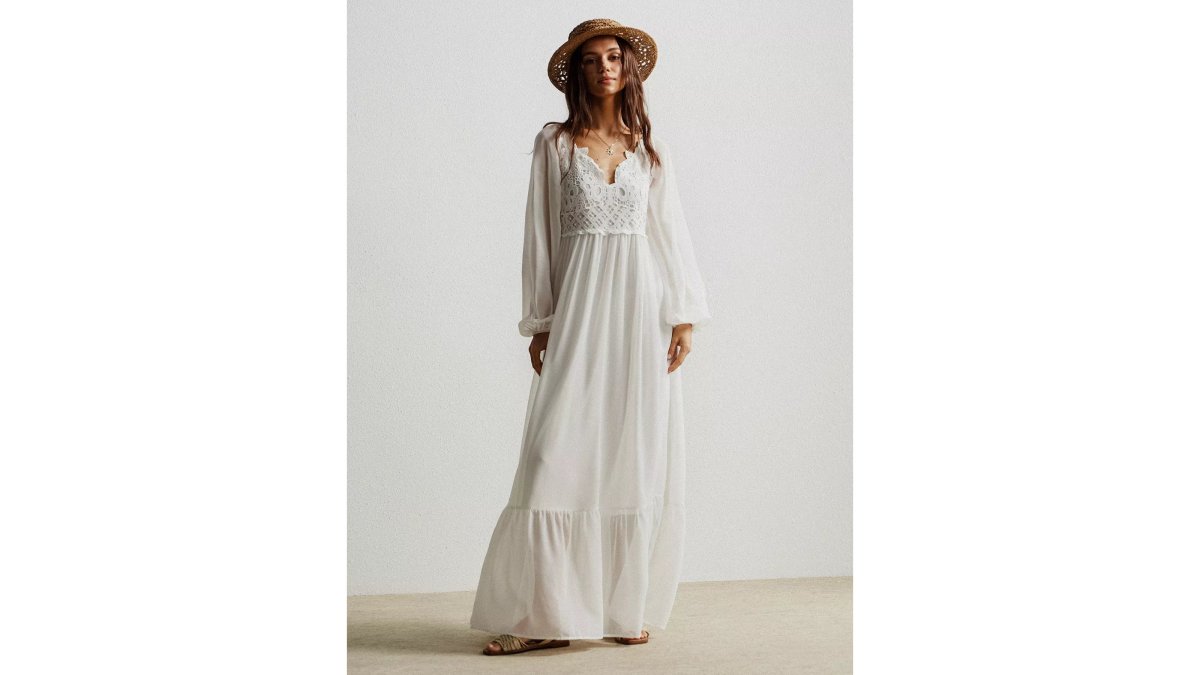
Boho Chic Crochet Lace Maxi Dress →
AI Sizing Tools: Helpful, but Verify Against the Vendor Chart
Some online bridal retailers now offer AI sizing that estimates your measurements from a few photos or a short video. These tools can be surprisingly accurate for bust, waist, and hips, but they often default to street-size logic. Always compare the AI output against the vendor's own bridal size chart. If the AI says you are a 10 and the bridal chart says 14, trust the chart and your tape.
How to Run a Virtual Fitting That Actually Works
A productive virtual fitting has four parts:
- Pre-call measurement check. Send your five measurements to the stylist before the call so they can compare them to the gown's spec sheet.
- Live tape review. On camera, have a friend re-measure your bust and waist while the stylist watches. This catches tape tilt and clothing bulk.
- Movement test. Walk, sit, and raise your arms. A gown that looks right standing still can pull across the back when you move.
- Alteration forecast. Ask the stylist to name the likely alterations, hem, bustle, bodice take-in, and estimate the timeline. This turns a vague "it should fit" into a concrete plan.
When to Skip the Virtual Fitting
If the seller cannot provide a spec sheet with hollow-to-hem and stretch details, a video call will not fix the missing data. In that case, prioritize sellers who publish full measurements and have a clear return policy. A virtual fitting is only as good as the information the seller gives you.
guidance on buying clothing and footwear online
Common Fitting Mistakes and How to Avoid Them
Our Tiered V-Neck Sleeveless Maxi Dress shows why the size chart matters: the bust range spans several centimetres within one size, so matching your exact measurement to the chart beats guessing.

Frequently Asked Questions
What is the difference between street size and bridal size?
Street size comes from standard retail clothing, while bridal sizing follows its own size chart that often runs one to two sizes larger. A woman who wears a street size 10 may measure into a bridal 12 or 14. Always order from the specific size chart on the product page and compare your bust, waist, and hip measurements rather than your usual dress size.
How do I accurately measure myself for an online wedding dress?
Use a soft measurement tape over nude undergarments, keeping it level and snug but not tight. Measure your bust at the fullest point, your natural waist at the narrowest part, and your hips at the widest point. For length, measure from your shoulder to where you want the hem to fall. Have a friend help so the tape stays parallel to the floor, and write each number down immediately.
How much should I budget for alterations when buying a dress online?
Alteration costs depend on the work needed. Hemming, taking in the bodice, and adding a bustle are the most common changes. Simple hems cost less than rebuilding a bodice or adjusting lace. Ask your tailor for a quote before committing, and factor in at least two fittings. Ordering closer to your largest measurement usually reduces how much a seamstress needs to take in.
Is it better to buy a wedding dress online or in person?
Both work. In-person shopping lets you feel fabric and see how a dress moves, while online shopping offers more variety, often lower prices, and the ability to order from anywhere. If you order online, protect yourself by checking the return policy, reading customer reviews, confirming shipping timelines, and planning a professional fitting once the dress arrives.
Should I order a wedding dress based on my largest measurement?
Yes, in most cases. Ordering to your largest measurement means the dress can be taken in where needed, which is easier and cheaper than letting it out. A tailor can remove fabric but cannot add what isn't there. If your bust and hips fall into different sizes, choose the size that fits the larger area and plan for alterations on the smaller one.
What are the risks of buying a wedding dress online without trying it on?
The main risks are fit issues, color differences from screen to real life, fabric that feels different than expected, and shipping delays. Reduce these by requesting real photos from the seller, reading verified customer reviews, confirming the return policy in writing, and ordering early enough to allow for alterations. Payment protection through your card or platform adds another layer of security.
When should I order my wedding dress online?
Order at least four to six months before your wedding date. This allows time for shipping, a professional fitting, alterations, and any last-minute adjustments. If your wedding is in three months or less, ask the seller about rush shipping and confirm the timeline in writing. Beach and destination weddings may need extra buffer if you're traveling with the dress.
What should I wear when measuring for a wedding dress at home?
Wear nude or light-colored undergarments that you plan to wear with the dress, since bulky clothing or padded bras can change your measurements. Stand straight with your arms relaxed at your sides. If you plan to wear shapewear or a specific bra on the wedding day, wear it during the measurement session so the numbers reflect your actual fit.