 how-to
What Should You Know Before Buying Wedding Attire Online?
Last Updated: October 25, 2026
Quick Summary
To buy wedding attire online safely, measure your bust, waist, and hips with a soft tape, match those numbers to the seller's size chart, and size up if you fall between sizes. Confirm the return window, condition rules, and who pays return shipping in writing before you pay, and pay by traceable card so you can raise a chargeback if the order goes wrong.
- Start shopping for a wedding dress nine to twelve months before your wedding date.
- Bridal sizing often runs smaller than street sizing, so match your measurements to the chart.
- Custom and made-to-measure orders are often final sale unless defective or not as described.
- Plan around the landed cost, including shipping, duties, alterations, and return postage.
- Leave at least two to three weeks between expected delivery and your first fitting.
Table of Contents
- Why Buying Wedding Attire Online Is Worth It
- Your Wedding Dress Shopping Timeline
- How to Measure for a Wedding Dress at Home
- Reading a Wedding Dress Size Chart
- What to Check in a Wedding Dress Return Policy
- How to Spot a Legit Online Bridal Retailer
- Fabric, Fit, and Real Photos: What to Look For
- Plan Your Total Cost and Delivery Risk
- Frequently Asked Questions
Why Buying Wedding Attire Online Is Worth It
Buying wedding attire online opens up a wider choice of styles, sizes, and prices than most local shops can stock.
The trade-off is simple. You cannot try the dress on before you pay.
Most guides treat the order as the finish line. In practice, the real decisions happen before you click buy and after the box arrives.
Below, we walk through the timeline, the measuring workflow, and the checks that protect your money.
Your Wedding Dress Shopping Timeline
Start shopping for a wedding dress nine to twelve months before your wedding date. That timeline leaves room for shipping, a fitting, and alterations without panic.
A practical timeline looks like this:
| When | What to do |
|---|---|
| 9-12 months out | Set your budget, browse styles, order fabric swatches |
| 6-8 months out | Take measurements, order the dress |
| 4-5 months out | Dress arrives, first fitting |
| 2-3 months out | Alterations, shoes, accessories |
| 4-6 weeks out | Final fitting, steam and store the dress |
Lead time is the number most buyers ignore. Custom and made-to-order dresses often need weeks to produce before they even ship. Ask for the shipping date and delivery window in writing before you pay.
Order early: rush orders cost more and add stress.
How to Measure for a Wedding Dress at Home
To measure for a wedding dress at home, use a soft tape measure over light clothing and record your bust, waist, and hip numbers.
You need a soft tape, a mirror, and a helper to keep the tape level.
Bust, Waist, and Hip Measurements
- Bust: measure around the fullest part, keeping the tape level across your back.
- Waist: measure the narrowest part of your torso, usually just above the belly button.
- Hips: measure around the fullest part, roughly 18-23 cm below the waist.
Stand tall and breathe normally. Do not pull the tape tight. A snug tape gives a smaller number, but it will not match the dress.
If you want a deeper walkthrough of sizing and alterations, our guide on how to find wedding dress fit covers measuring, sizing, and tailoring in more detail.
Length and Shoe Height
Length depends on your shoes. Put on the shoes you plan to wear, or ones with the same heel height, then measure from waist to floor.
For a barefoot beach ceremony, measure flat-footed; for heels, measure in the heels. Note the shoe height and send it with your order if asked.
Reading a Wedding Dress Size Chart
A wedding dress size chart lists body measurements for each size, and you should match your own numbers to the chart rather than guessing your usual size.
Read the chart in three steps:
- Find the size whose bust, waist, and hip numbers are closest to yours.
- If you fall between two sizes, size up. Taking a dress in is easier than letting it out.
- Check whether the chart is in centimetres or inches, and convert your numbers if needed.
Custom sizing removes much of the guesswork. Many sellers ask for bust, waist, hip, total height, and shoe height so the dress is cut to your body.
If size charts confuse you, our post on ordering wedding dresses online shares fitting tips for buying a dress you have not tried on.
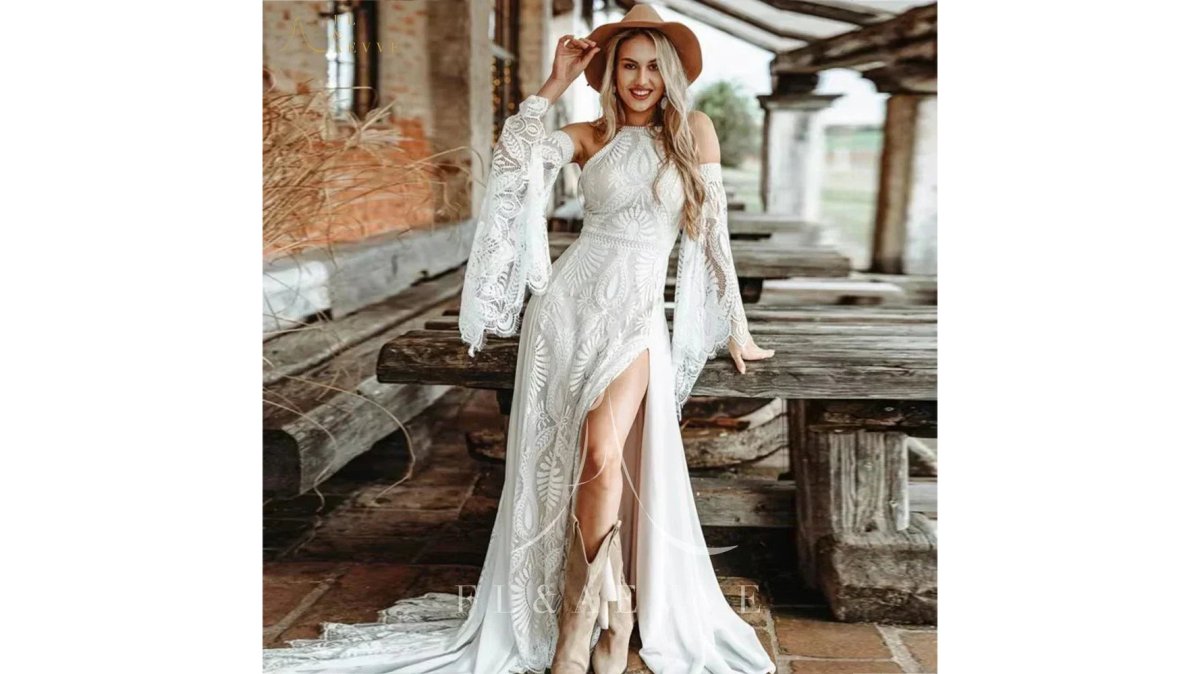
FL&AEVVE Customized Bohemian Chic Civil Bridal Dress Hippie Crochet Lace →
What to Check in a Wedding Dress Return Policy
A wedding dress return policy tells you whether you can send the dress back, in what condition, and by when. Read it before you order, because the terms decide how much risk you carry. Treat it as a policy checklist plus a resolution playbook.
The policy checklist
Before you pay, confirm these points in writing (a saved chat message or email is better than a product-page promise):
- Return window: how many days you have after delivery, and whether the clock starts at shipping or at delivery.
- Condition rules: tags on, unworn, original packaging, and whether try-on is allowed.
- Custom and made-to-measure orders: many sellers treat these as final sale unless the item is defective or not as described. Confirm the exact wording.
When the order goes wrong: a resolution workflow
Buyers often discover a problem only after the return window has closed or after paying for alterations. Work in this order:
- Document on arrival. Photograph the package before opening, then photograph the garment, tags, and any defect or mismatch against the listing. Keep the listing screenshots too, since sellers sometimes edit product pages.
- Notify the seller in writing immediately. State the problem, attach photos, and ask for a specific remedy (replacement, repair, partial refund, or full return). Give a deadline in your message.
- Escalate through the platform. If you bought through a marketplace, open a case within its stated window. Platform dispute windows are often shorter than the seller's own return window.
- Use your card protections. If you paid by credit card and the seller will not resolve a misrepresented or undelivered order, ask your card issuer about a chargeback. Keep order confirmations, messages, and photos as evidence. Debit-card and direct-transfer payments offer weaker recourse, which is why traceable card payment matters.
- Know the limits. Chargeback and dispute rules vary by card network and country, and custom-made items are harder to dispute than stock items. If the amount is large, consumer-protection advice in your jurisdiction is worth checking before you escalate.
Keep a paper trail
Store the order confirmation, product-page screenshots, every message with the seller, the tracking number, and delivery photos in one folder. If you need to escalate, that folder is your case, and it proves a delay against a wedding date you told the seller about in advance.
How to Spot a Legit Online Bridal Retailer
A legit online bridal retailer shows clear contact details, real product photos, honest size charts, and a written return policy. If a shop hides its address, uses only model shots, or dodges questions, treat that as a warning.
Run this checklist before you pay:
- The site lists a real business name and a way to contact a person.
- Product pages show fabric, measurements, and construction details.
- Customer reviews and customer photos exist, not just studio images.
Watch out: a price far below every other shop usually means a copy, a stock photo, or a dress that will never arrive.
Fabric, Fit, and Real Photos: What to Look For
Fabric and construction decide how a dress feels and moves, and real customer photos show how it looks on a body. Read the product description closely and look past the styled shots.
What to check:
- Fabric: natural fibres like cotton and lace breathe better in heat. Check the material list on the product page.
- Construction: a built-in bra, boning, and a secure back closure add support.
- Photos: ask for real bride photos. Model shots are posed and lit; customer photos show the truth.
For an example of a detailed listing, browse the FL&AEVVE Customized Bohemian Chic Civil Bridal Dress Hippie Crochet Lace Wedding Dress With Slit Gatsby Elvish Bride Gown Robe.

Plan Your Total Cost and Delivery Risk
The dress price is only part of the total. Add shipping, rush fees, alterations, shoes, accessories, and return postage, and build that full number before you order. Coordinating a whole wedding party changes both the cost and the delivery risk.
Build the full landed cost
List every line before you commit, because the dress price can be less than half of what you actually spend:
- Garment price, including any custom-sizing surcharge.
- Shipping, and whether express shipping is required to hit your date.
- Rush fees for made-to-order pieces.
Set a wedding-date buffer
Delivery risk is the other half of the budget: a dress that arrives late is worse than one that costs a little more. Work backward from the wedding date and build in a buffer at every stage:
- Confirm the production date, shipping date, and delivery window in writing before you pay.
- Leave at least two to three weeks between the expected delivery and your first fitting, so a delay does not cascade into alterations.
- Keep the tracking number and check it against the promised window; a stalled tracking status is an early warning, not a reason to wait.
Coordinating the full wedding party
If the wedding party needs outfits too, order everyone's pieces together and early, coordinating several people takes more time, and the risks compound:
- Different attire types have different lead times. Suits, separates, and guest attire may ship faster than a made-to-order gown, but sizing and alterations still take time.
- Collect measurements from everyone at the same time and compare each person against the specific garment's size chart, not a shared size.
- Order swatches for the whole group so colors match across different fabrics and dye lots.
Frequently Asked Questions
How do I know what size wedding dress to order online?
Use your bust, waist, and hip measurements, not your usual clothing size. Compare them to the specific size chart on the product page, and if you fall between sizes, order the larger one and plan for alterations. For custom or plus-size options, many retailers ask for bust, waist, hip, total height, and shoe height so the gown is made to your measurements.
What should I check in a wedding dress return policy before ordering?
Look for the return window, whether customized or made-to-order items are final sale, who pays return shipping, and whether you get a refund or store credit. Custom-sized dresses often cannot be returned without a reason, so contact the seller before buying. Save screenshots of the policy and pay with a method that offers buyer protection.
How far in advance should I order wedding attire online?
Start shopping six to nine months before the wedding date. Order your dress at least four to six months ahead to allow time for delivery, alterations, and any exchange. For custom sizing or rush orders, add two to four extra weeks. Bridal party attire should be ordered together at least three months out so everyone has time for fittings.
How can I tell if a wedding dress will fit when buying it online?
Take fresh measurements and compare them to the size chart, read customer reviews for fit notes, and look at customer photos to see how the dress hangs on real bodies. Check the fabric and construction details, and ask the seller about stretch or lining. If the dress is customized, confirm the measurement form and ask about the alteration allowance before you pay.
Buying wedding attire online comes down to planning: measure twice, read the fine print, and leave room for delays. That is where Beach Bride & Groom can help. Our collection covers romantic boho dresses and attire for the whole wedding party, with free shipping available and custom sizing on selected pieces. Get started with Beach Bride & Groom and dress your celebration for sunlit vows and barefoot moments.