 how-to
Style Mismatched Beach Wedding Party: A How-To Guide
Table of Contents
- What Makes a Mismatched Beach Wedding Party Work
- Choosing a Cohesive Color Palette for Beach Bridesmaid Dresses
- Boho Beach Wedding Color Palettes That Complement Your Vision
- Mismatched Bridesmaid Dress Rules for Beach Weddings
- Beach Wedding Groom Attire Ideas and Party Coordination
- Accessorizing for a Cohesive Beach Wedding Party Look
- Practical Steps to Style Your Mismatched Wedding Party
- Common Mistakes to Avoid When Styling a Mismatched Beach Wedding Party
- Frequently Asked Questions
Last Updated: September 18, 2026
What Makes a Mismatched Beach Wedding Party Work
A mismatched beach wedding party succeeds when every guest feels comfortable, looks cohesive, and can actually move freely in sand and heat. The key is choosing a unified framework, a color palette, fabric standard, or silhouette approach, that lets everyone express their style without looking scattered.

A mismatched beach wedding party succeeds when every guest feels comfortable, looks cohesive, and can actually move freely in sand and heat. The key is choosing a unified framework, a color palette, fabric standard, or silhouette approach, that lets everyone express their style without looking scattered. A bride who says "wear any length, any neckline, but stick to this color palette and use breathable fabric" creates visual harmony. A bride who picks three complementary hues and lets guests choose their own dress style gets better results than one with no guidance at all.
The challenge most couples face is that beach weddings demand practical choices traditional weddings don't. Sand gets everywhere. Heat and humidity wilt heavy fabrics. Guests need to move comfortably. A mismatched approach actually solves these problems better than forcing everyone into identical dresses that might not fit, might overheat them, or might not suit their body type.
This guide walks you through the exact steps to style your mismatched beach wedding party so it looks intentional, feels effortless, and keeps everyone happy on the day.
Choosing a Cohesive Color Palette for Beach Bridesmaid Dresses
Your color palette is the single most important decision for a mismatched beach wedding party. It's the anchor that ties everything together visually, even when dress lengths, necklines, and fabrics vary.
Neutral Tones and Coastal Aesthetics
Neutral tones, ivory, champagne, blush, sage, taupe, and soft gray, create an effortless, timeless look that photographs beautifully against ocean and sand. These colors naturally complement beach settings without competing with the environment.
Neutrals work because they:
- Flatter most skin tones
- Don't clash with any secondary colors you add
- Photograph well in bright, direct sunlight
- Age gracefully in photos (won't look dated in five years)
Consider mixing warm neutrals (champagne, cream, warm taupe) with cool neutrals (soft gray, sage, pale blue-gray) for subtle variation. The key is keeping them in the same tonal family so they read as intentional, not accidental.
Nautical Themes and Hue Variation
If neutrals feel too safe, a nautical theme brings coastal character while staying cohesive. Navy, white, and cream create a classic beach aesthetic. Add soft coral, seafoam, or pale gold for warmth.
Hue variation means choosing a primary color and then selecting 2-3 shades of it. For example: deep navy, medium navy, and pale navy-gray. Or: sage, soft sage, and barely-there sage. This approach gives visual interest while maintaining harmony.
The trick is avoiding too many different hues. Four or more distinct colors start to look scattered rather than coordinated. Stick to one primary color family with 2-3 shade variations for a mismatched beach wedding party that reads as intentional.
Boho Beach Wedding Color Palettes That Complement Your Vision
Boho beach weddings thrive on warm, earthy tones mixed with soft pastels. Think terracotta, dusty rose, cream, gold, and soft olive.
Color Blocking and Visual Cohesion
Color blocking means assigning specific colors to specific roles. Your bridesmaids wear one shade, groomsmen wear a complementary shade, and parents wear a third. This creates visual structure without requiring everyone to dress identically.
For example:
- Bridesmaids: dusty rose
- Groomsmen: cream linen
- Parents: soft gold or olive
This approach ensures clear visual separation while maintaining a unified palette. Guests instantly understand the wedding party structure just by looking.
Mixing Patterns, Textures, and Silhouettes
Once your color palette is locked, you can introduce pattern and texture safely. A guest in a solid dusty rose dress pairs beautifully with a guest in a rose-and-cream striped dress, as long as both are the same color family.
Textures add depth:
- Smooth satin for formality
- Lightweight cotton for comfort
- Crochet or lace for boho details
- Linen for relaxed elegance
Silhouettes can vary, A-line, slip dress, tiered, fitted, as long as they're all in your chosen colors and fabrics work for the beach environment. The American Wedding Association notes that coordinated color with varied silhouettes creates a modern, intentional look that traditional matching dresses can't achieve.

Mismatched Bridesmaid Dress Rules for Beach Weddings
Clear rules prevent chaos. Set expectations early so guests can shop confidently.
Fabric Breathability and Heat Management
Beach weddings in heat demand breathable fabrics. Cotton, linen, and lightweight polyester blends allow air circulation. Avoid heavy satin, velvet, or thick crepe, they trap heat and will leave guests uncomfortable.
Breathable fabrics also dry faster if someone gets wet. At a beach venue, that matters.
When choosing fabrics for your mismatched beach wedding party, prioritize:
- Natural fibers (cotton, linen) or blended synthetics designed for heat
- Lightweight construction (under 4 ounces per yard)
- Moisture-wicking properties
- Machine-washable care (sand gets everywhere)
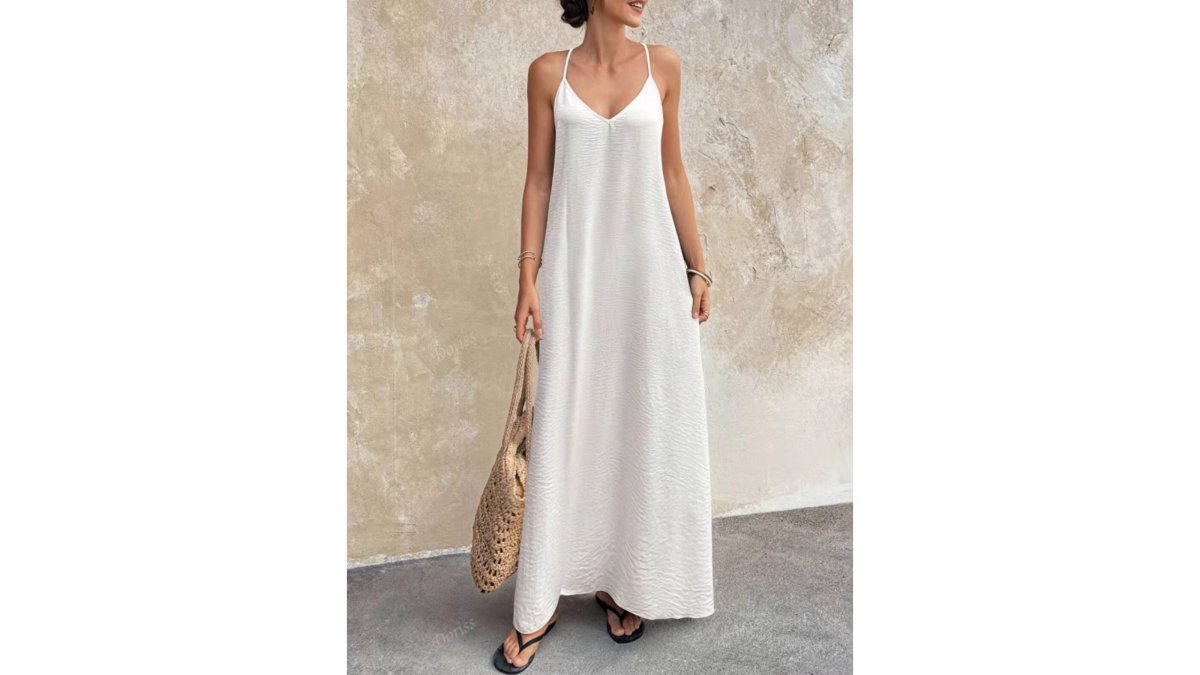
The V-Neck Maxi Cami Dress from Beach Bride & Groom uses 100% polyester and is machine-washable. It's simple enough to pair with different accessories for variation while keeping everyone in the same fabric weight and drape.

Dress Length and Sand-Friendly Footwear
Dress length affects movement and practicality. Maxi dresses work beautifully but drag in sand. Midi dresses (knee-length to mid-calf) offer a sweet spot, elegant but easier to move in. Knee-length dresses feel more casual but maximize comfort.
If you're mixing lengths, give guests a range: "Midi or maxi preferred" rather than leaving it open. This prevents someone from wearing a mini dress while others wear floor-length gowns.
Footwear for sand requires specific choices:
- Barefoot (most beach-appropriate, requires pedicure planning)
- Flat sandals or flip-flops (practical, casual)
- Metallic or beaded sandals (dressier, still comfortable)
- Flat strappy sandals (elegant without heels)
Avoid heels on sand, they sink and break easily.
Beach Wedding Groom Attire Ideas and Party Coordination
Groom and groomsmen should coordinate with bridesmaids without matching exactly. If bridesmaids wear dusty rose, groomsmen might wear cream linen or soft gold.
Keep groom attire simple:
- Lightweight linen or cotton blend
- Breathable fabrics (no heavy jackets)
- Coordinating color from your palette
- Optional: linen shirt with rolled sleeves for casual elegance
Accessorizing for a Cohesive Beach Wedding Party Look
Accessories tie together a mismatched beach wedding party and let guests add personality. Coordinated accessories create visual unity even when dresses vary.
Choose 2-3 accessory categories and set guidelines:
- Jewelry (gold vs. silver, statement vs. minimal)
- Flowers (bouquets, hair flowers, or none)
- Footwear (barefoot, sandals, or specific style)
- Cover-ups (matching wraps, shawls, or linen shirts)
Practical Steps to Style Your Mismatched Wedding Party
Follow these steps in order. They build on each other.
Step 1: Set Your Color Palette First
Choose 2-4 colors maximum. Decide if you want neutrals, nautical, boho, or a custom palette. Write it down and share it with your wedding party immediately.
Example palettes:
- Neutral: cream, champagne, sage
- Nautical: navy, white, pale blue
- Boho: dusty rose, cream, gold
Step 2: Select Fabrics That Work in Heat and Humidity
Set a fabric standard. Tell guests: "Choose lightweight, breathable fabrics only, cotton, linen, or cotton blends. Machine-washable preferred."
Step 3: Choose Complementary Silhouettes and Necklines
Decide if you want all the same neckline (V-neck, sweetheart, off-shoulder) or if variation is fine. If you allow variation, set a tone: "Keep necklines modest and elegant" or "Go boho with off-shoulder or cami styles."
Step 4: Coordinate Accessories and Footwear
Pick one accessory category to coordinate across the entire wedding party. This is your visual anchor.
Options:
- Footwear (everyone in barefoot sandals or metallic sandals)
- Jewelry (all gold, all silver, or all pearl)
- Flowers (matching bouquets or hair flowers)
- Wraps (matching linen shawls or cover-ups)
Step 5: Plan for Post-Wedding Wearability
A smart mismatched beach wedding party approach means guests can actually wear their dresses again. Choose classic colors, timeless silhouettes, and quality fabrics.
Common Mistakes to Avoid When Styling a Mismatched Beach Wedding Party
Too many colors. Five or six colors feel scattered, not coordinated. Stick to 2-4 maximum.
Frequently Asked Questions
How do you keep mismatched bridesmaid dresses looking cohesive for a beach wedding?
Start with a unified color palette, choose 2-3 complementary hues and ensure every dress falls within that range. Coordinate fabrics by selecting breathable materials like cotton-blend or polyester for all pieces. Match accessories, footwear, and jewelry across the party. Silhouette variety is fine; neckline consistency helps. The Crochet Off-Shoulder Maxi Dress (95% cotton, 5% spandex) pairs well with the V-Neck Maxi Cami Dress when both are in the same color family, creating visual harmony without uniformity.
What are the best fabric choices for a beach wedding party?
Look for breathable, humidity-resistant materials that dry quickly and move freely in salt air. Cotton blends, lightweight polyester, and cotton-spandex mixes work well. Avoid heavy silks or tight-weave fabrics that trap heat. The Crochet Off-Shoulder Maxi Dress combines 95% cotton with 5% spandex for stretch and breathability, ideal for tropical climates. Polyester options like the V-Neck Maxi Cami Dress offer durability and easy care (machine wash cold, tumble dry low) after sand exposure.
Can you mix patterns and solids for a beach wedding party?
Yes, if you maintain color harmony. Use solids as your base and add one pattern (floral, striped, or geometric) to 1-2 dresses. Ensure the pattern's dominant color matches your palette. For example, pair solid neutral dresses with one floral piece that echoes those same tones. Texture layering, combining smooth fabrics with crochet or tiered details, adds visual interest without clashing. Avoid multiple competing patterns or colors that pull attention away from the cohesive look.
What accessories work best for a boho-inspired beach wedding party?
Choose barefoot sandals, delicate gold or silver jewelry, and beaded accessories that complement your color palette. Raffia hats, shell necklaces, and woven wraps add coastal flair without overwhelming the look. Keep accessories minimal, one statement piece per person works better than layering multiple items. Ensure all metal tones match (warm or cool) across the party. Avoid heavy costume jewelry that feels out of place in a beach setting; opt for natural materials and subtle sparkle instead.